
AI Marketing Tools for SEO: The Best AI SEO Software in 2026 (with Pricing)
SEO in 2026 is no longer just about ranking on Google — it is about staying visible everywhere people search, including AI-generated answers. AI marketing tools for SEO now handle the research, optimization, and visibility tracking that used to eat a specialist’s whole week, compressing it into a single dashboard.
This guide covers what AI SEO tools actually do, the categories that matter, the specific tools marketers rely on (with 2026 prices), and a workflow to use them without triggering a Google penalty.
What Are AI Marketing Tools for SEO?
AI SEO software refers to tools that use machine learning and large language models to automate and improve search engine optimization: keyword research, content briefs, on-page optimization scoring, technical audits, internal linking, rank tracking, and — new in 2026 — tracking whether a brand appears in AI answers. Traditional platforms such as Semrush and Ahrefs bolted AI features onto existing databases; newer tools like Surfer, Clearscope, and Frase were built around generative AI from the start.
From keyword tools to AI copilots
Older AI SEO software mostly automated single tasks — a keyword suggestion list, a meta description generator. Current AI-powered SEO software goes further: it reads a full SERP, extracts the entities and subtopics that competing pages cover, drafts a content brief, and scores a draft against that brief in real time. That shift turned standalone utilities into something closer to an SEO copilot that sits next to the writer for the whole process, not just the research phase.
GEO and AEO: the new layer
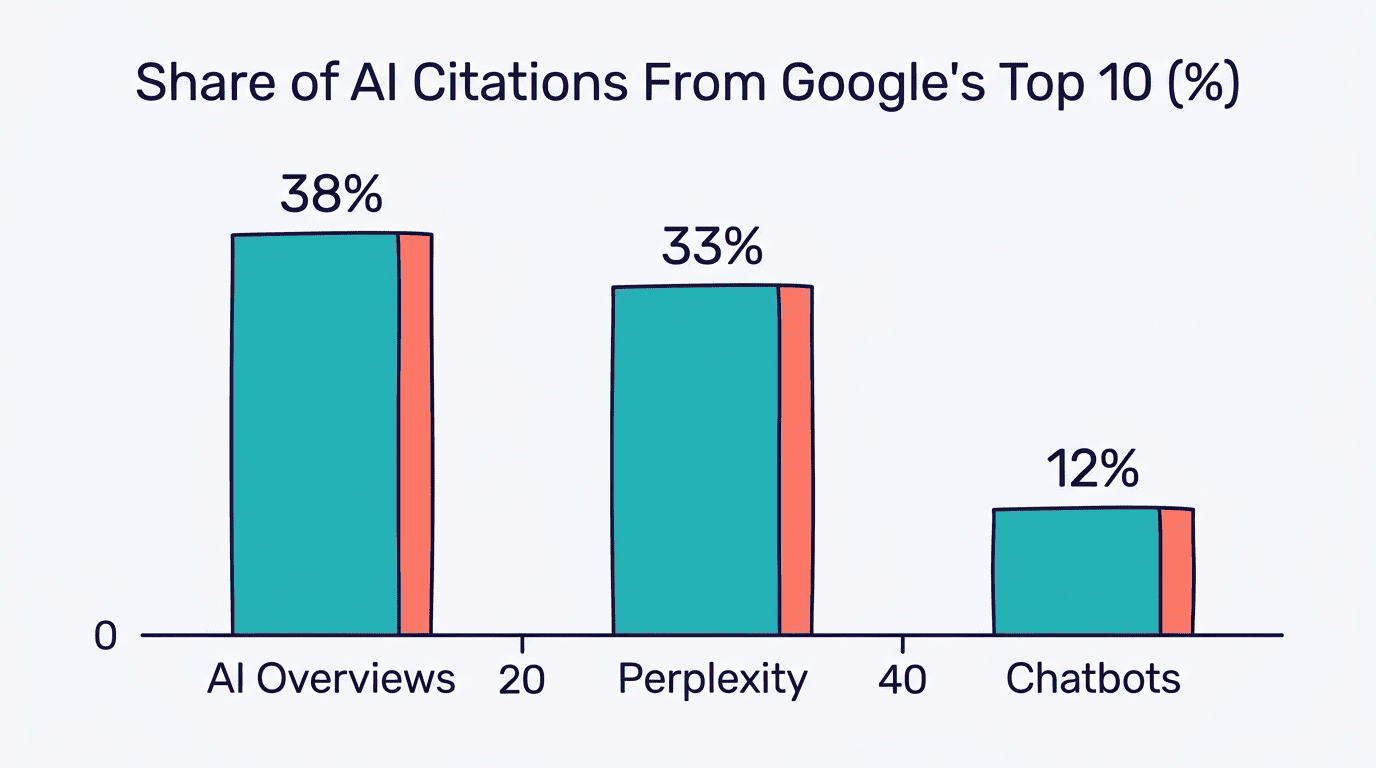
Two new terms dominate 2026 SEO conversations: GEO (Generative Engine Optimization), which means optimizing content to be cited by generative AI systems like ChatGPT and Gemini, and AEO (Answer Engine Optimization), which focuses on winning direct-answer placements. A large-scale Ahrefs study of 863,000 keywords found that only 38% of Google AI Overview citations come from pages already ranking in Google’s top 10 — down sharply from 76% just months earlier — and a separate Ahrefs analysis of 15,000 prompts found that just 12% of ChatGPT, Gemini, and Copilot citations come from top-10 pages — proof that AI visibility is a genuinely different game from classic rankings and needs its own continuous monitoring, not a one-time audit.
Why AI SEO Tools Matter in 2026
AI Overviews and AI-powered answer engines have changed what «ranking» even means, and manual workflows can no longer keep pace with tracking both surfaces at once.
Search is splitting in two
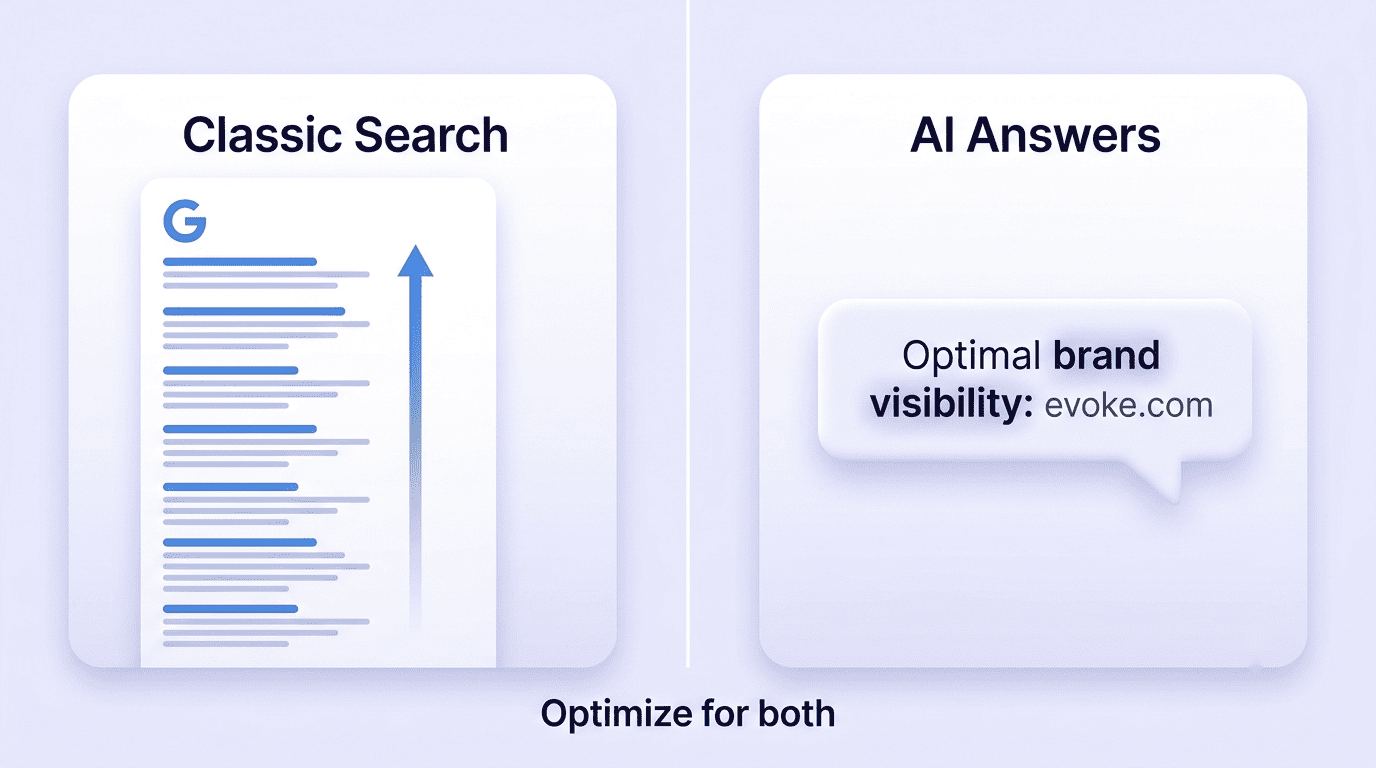
AI Overviews now appear in close to half of all U.S. Google searches — roughly 48% as of early 2026, per third-party trackers such as BrightEdge (Google itself does not publish this figure) — and Gartner projects organic search engine volume will drop by around 25% by 2026 as AI chatbots and other virtual agents absorb clicks that used to go to a ranked link. A tool that only optimizes for the classic blue links now misses half of the discovery surface — which is exactly why AI visibility tracking has become its own product category rather than a feature bolted onto rank trackers.
The optimization work is too big to do by hand
Manual keyword research, brief-building, and rank tracking across both Google and AI engines simply does not scale for a small team. AI tools compress days of analysis into minutes: Semrush’s keyword database alone spans over 26 billion keywords, a volume no human researcher could work through unaided.
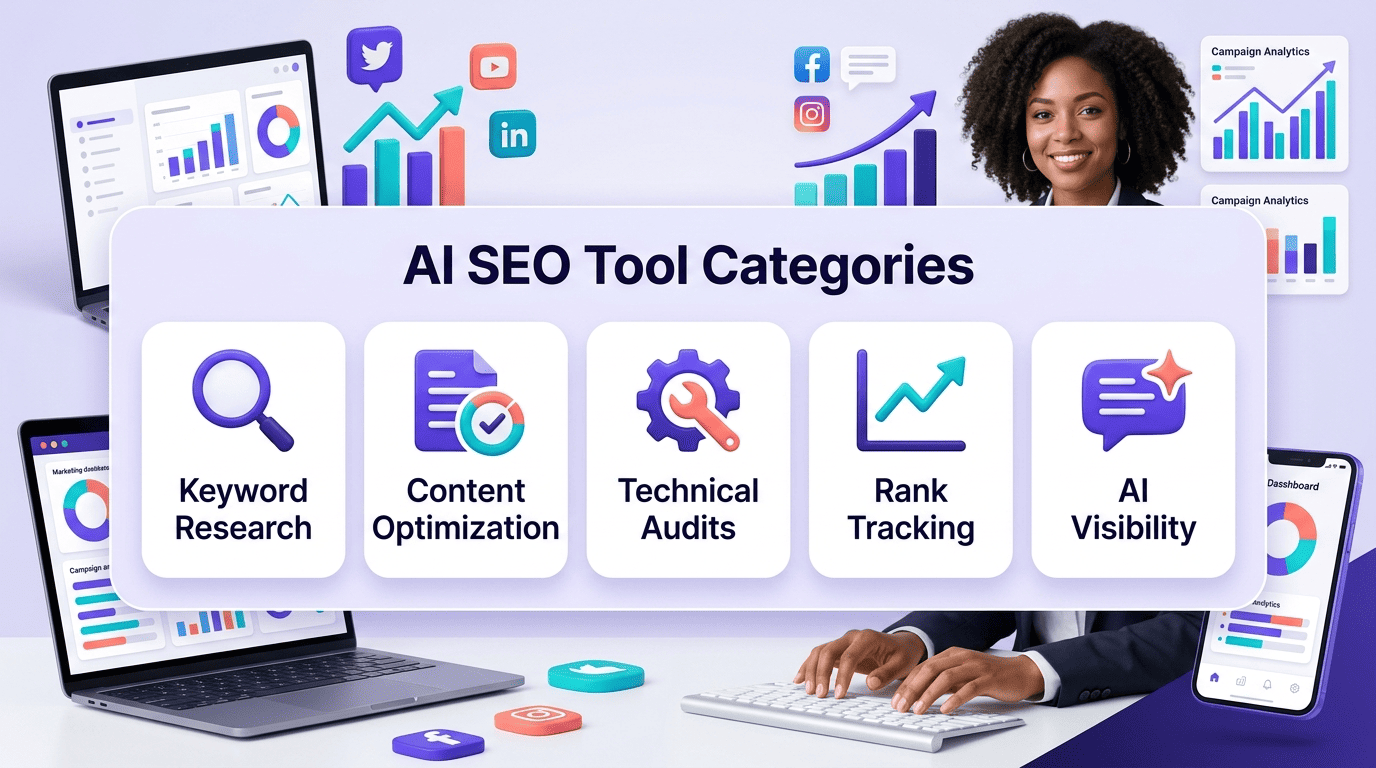
The Main Categories of AI SEO Tools
AI SEO software splits into a handful of distinct jobs, and most marketing teams assemble a small stack rather than relying on one tool for everything.
- Keyword and topic research — mapping search intent and competitor gaps
- Content optimization and scoring — grading a draft against top-ranking pages
- Technical SEO audits — crawling for indexing, speed, and structure issues
- Rank tracking — monitoring classic Google positions over time
- AI visibility tracking — monitoring citations inside ChatGPT, Perplexity, and AI Overviews
| Category | Core job | Example tools |
|---|---|---|
| Research | Keyword & topic discovery | Semrush, Ahrefs |
| Optimization | Content scoring & briefs | Surfer SEO, Clearscope, Frase |
| Technical | Crawls & audits | Ahrefs, SE Ranking |
| Rank tracking | Google position monitoring | Semrush, SE Ranking |
| AI visibility | AI-answer citation tracking | Otterly.AI, Ahrefs Brand Radar |
Research, optimization, and technical work still anchor the stack
The first three jobs — research, optimization, and technical audits — remain the backbone of any SEO program, AI-assisted or not. What changed is speed: a technical crawl that once took a consultant a full day now returns prioritized fixes in minutes, and a content brief that used to require manually reading ten competing articles now comes pre-built with the entities and subtopics those pages share.
The new category: AI visibility tracking
Brand-new in 2026, tools like Otterly.AI, Ahrefs Brand Radar, SE Visible, and Profound monitor how often — and how positively — a brand appears inside ChatGPT, Perplexity, Gemini, and Google AI Mode answers. This matters because AI assistants cite very differently from Google: Perplexity is the outlier, pulling roughly one in three citations from pages already in Google’s top 10, while ChatGPT, Gemini, and Copilot pull from the top 10 only about 12% of the time. Ranking well on Google is no guarantee of AI citation, which is exactly why the tracking layer exists as its own discipline.
Best AI Marketing Tools for SEO (with Pricing)
Pricing below reflects published entry plans for 2026; most vendors also sell higher-tier and enterprise plans with more seats and data. The best AI marketing tools for SEO cluster into all-in-one platforms, content optimizers, and the new AI-visibility trackers.
| Tool | Best for | Entry price |
|---|---|---|
| Semrush | All-in-one SEO + AI visibility | ~$139.95/mo (Pro) |
| Surfer SEO | Content optimization & scoring | $99–$299/mo |
| Ahrefs | Backlinks, audits, Brand Radar | $129/mo (Lite) |
| SE Ranking | Affordable all-rounder | from $103/mo (annual) |
| Clearscope | Optimizing human-written content | from $129/mo |
| Frase | Briefs & content on a budget | $49–$299/mo |
| Otterly.AI | AI visibility tracking | $29–$489/mo |
Semrush and Ahrefs run the full stack. Semrush (~$139.95/mo on the Pro plan, with the Semrush One bundle at $199/mo adding AI-visibility tracking and MCP access) connects keyword research, competitor analysis, rank tracking, AI Overview monitoring, and content optimization inside one workflow. Ahrefs ($129/mo on the Lite plan) leads on backlink data and technical audits, and adds AI visibility through its Brand Radar feature.
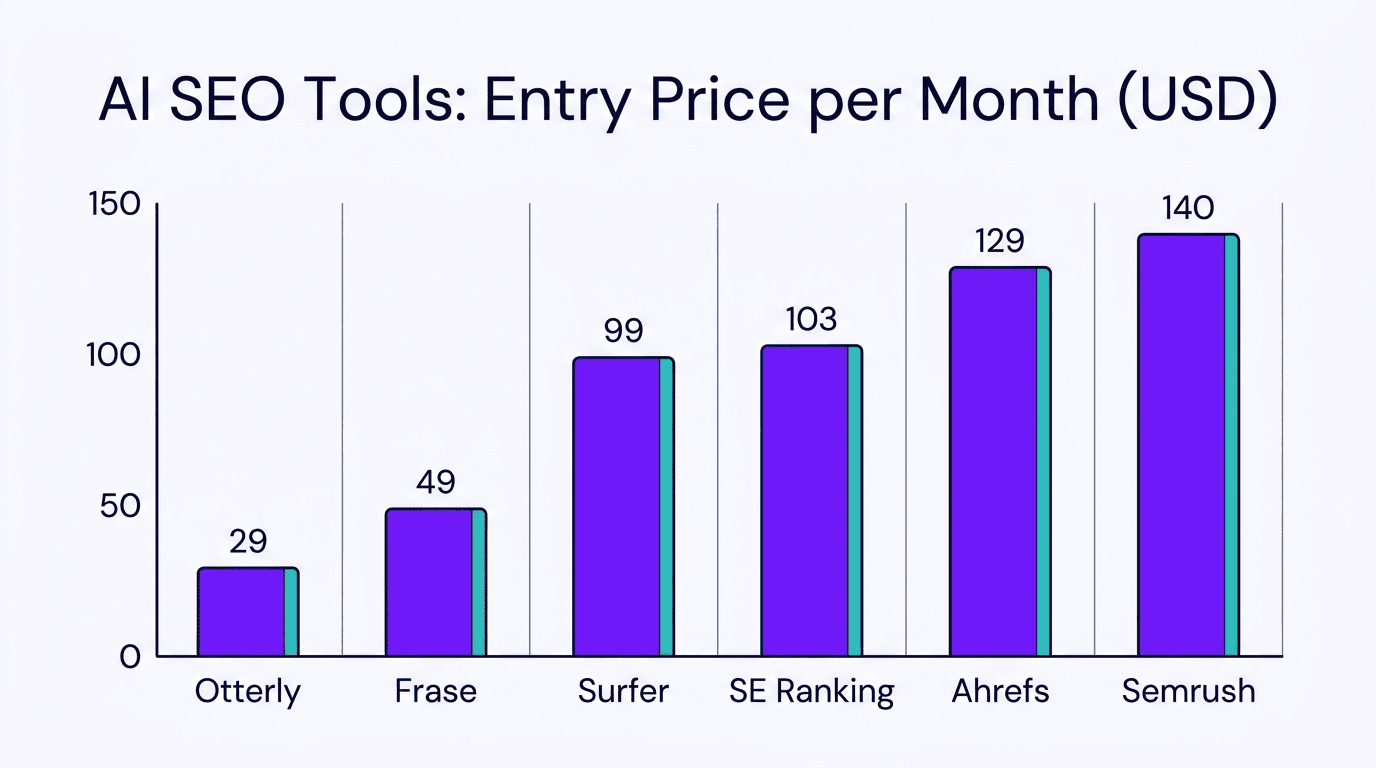
Surfer, Clearscope, and Frase compete on content scoring. Surfer SEO ($99–$299/mo) grades drafts against top-ranking pages and now covers internal linking suggestions plus basic AI visibility signals. Clearscope (from $129/mo) is the premium pick specifically for optimizing content a human already wrote, rather than generating it from scratch. Frase ($49–$299/mo) is the budget brief-builder most small teams start with.
SE Ranking is the value pick for small teams. At from $103/mo on annual billing it bundles rank tracking, audits, and keyword research at a fraction of the cost of Semrush or Ahrefs, trading some data depth for affordability — a reasonable trade for teams managing a handful of sites rather than an agency portfolio.
How to Use AI Tools for SEO: A Practical Workflow
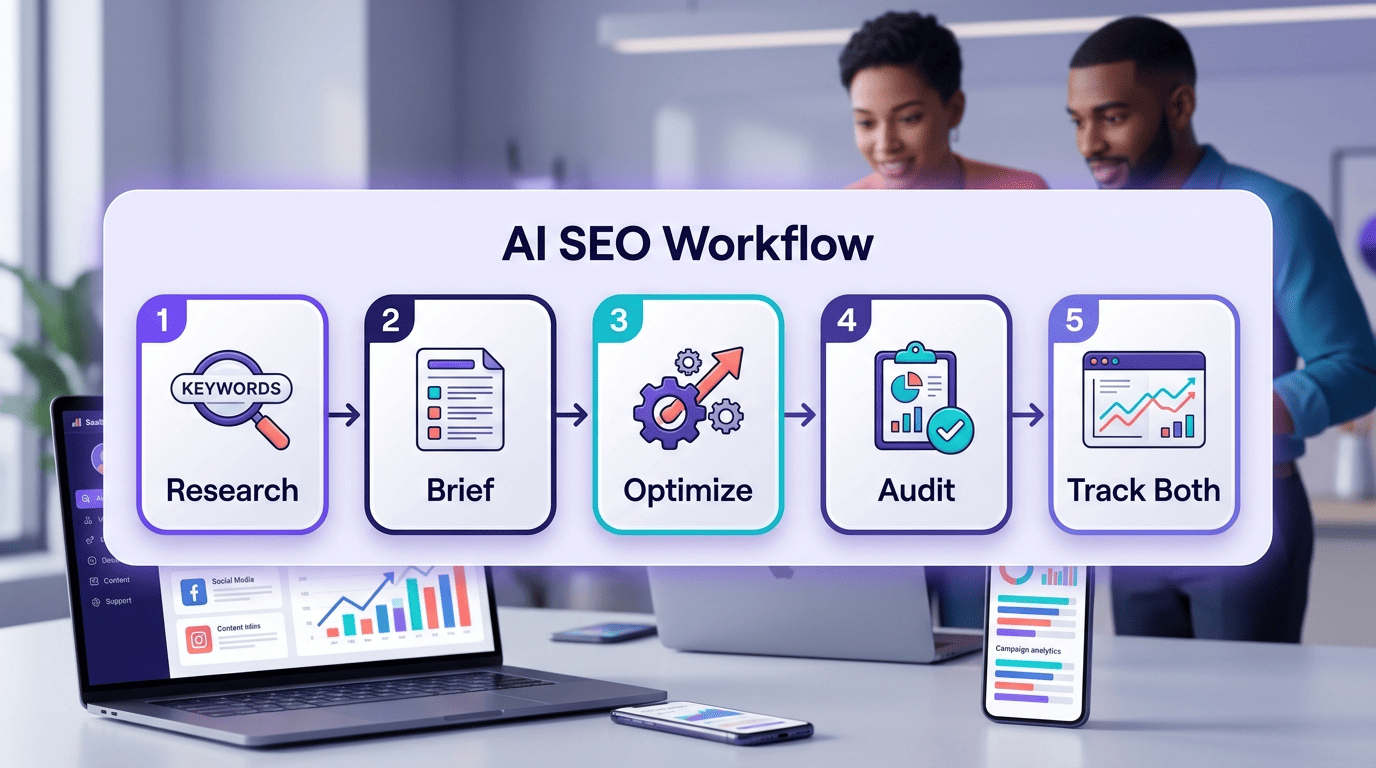
AI SEO tools work best chained together in a fixed sequence, with a human checking the output at every stage rather than publishing anything unreviewed.
- Research — use Semrush or Ahrefs to map keywords and search intent for the target topic.
- Brief — build an entity-rich outline with Frase or Surfer, pulling in the subtopics competitors cover.
- Optimize — score the draft in Surfer or Clearscope against top-ranking pages before publishing.
- Audit — run a technical crawl with Ahrefs or SE Ranking to catch indexing and speed issues.
- Track both — monitor classic Google rankings and AI-answer visibility with Otterly.AI or Ahrefs Brand Radar.
Skipping the human review step at any point in this loop is where most AI-SEO failures start — the tools are accurate at pattern-matching against what already ranks, but they cannot judge whether a claim is true or whether the brand voice is right.
Do AI SEO Tools and AI Content Actually Rank?
The evidence so far says AI-assisted content is not penalized for being AI-assisted — but it is held to the same quality bar as anything else.
Google cares about quality, not the machine
Ahrefs analyzed 600,000 pages and found that AI-generated content does not inherently hurt rankings compared with human-written content. Google Search Central has been explicit about this for years now:
Our focus on the quality of content, rather than how content is produced, is a useful guide that has helped us deliver reliable, high quality results to users for years.
Google Search Central
In practice, this means Google’s ranking systems evaluate content against the same signals regardless of production method, commonly summarized as E-E-A-T:
- Experience — does the content show first-hand knowledge of the topic?
- Expertise — is the subject matter handled with real depth?
- Authoritativeness — does the source have standing on the topic?
- Trustworthiness — is the information accurate and verifiable?
Content that is thin, unedited, or published purely to game rankings gets filtered regardless of whether a person or a model typed the first draft — which is exactly why every workflow above still ends with a human review step, not a publish button.
Benefits and Limits of AI SEO Tools
AI SEO software is an accelerator for a strategy that already works, not a replacement for having one.
What teams gain:
- Speed on research and technical audits that used to take days
- Consistent on-page optimization scoring across every piece of content
- Coverage of both classic Google rankings and the newer AI-answer surfaces in one place
What to watch for:
- Occasional hallucinated facts or statistics that need manual verification
- Generic-sounding first drafts that still need a real editor
- Subscription costs that stack fast when a team runs a full toolset ($29–$490+/mo per tool)
- Over-reliance on AI suggestions that can flatten a brand’s distinct voice over time
The tools remove the grunt work of SEO — pulling data, scoring drafts, flagging technical issues — but strategy, judgment, and final editing still belong to a person. Used that way, AI-powered marketing tools turn SEO from a weekly time sink into a repeatable, measurable system.
Related AI marketing tool guides
Building a full stack? Explore AI content creation tools and AI analytics and reporting tools to round out your workflow across the marketing funnel.