
AI Marketing Tools for Advertising and Paid Ads: The 2026 Playbook
Paid advertising was the first place AI proved it could out-perform a human at scale — sorting audiences, testing creative and reallocating budget faster than any team could by hand. The best AI marketing tools for advertising now cover four jobs at once: generating ad creative, targeting audiences, optimizing bids and measuring results.

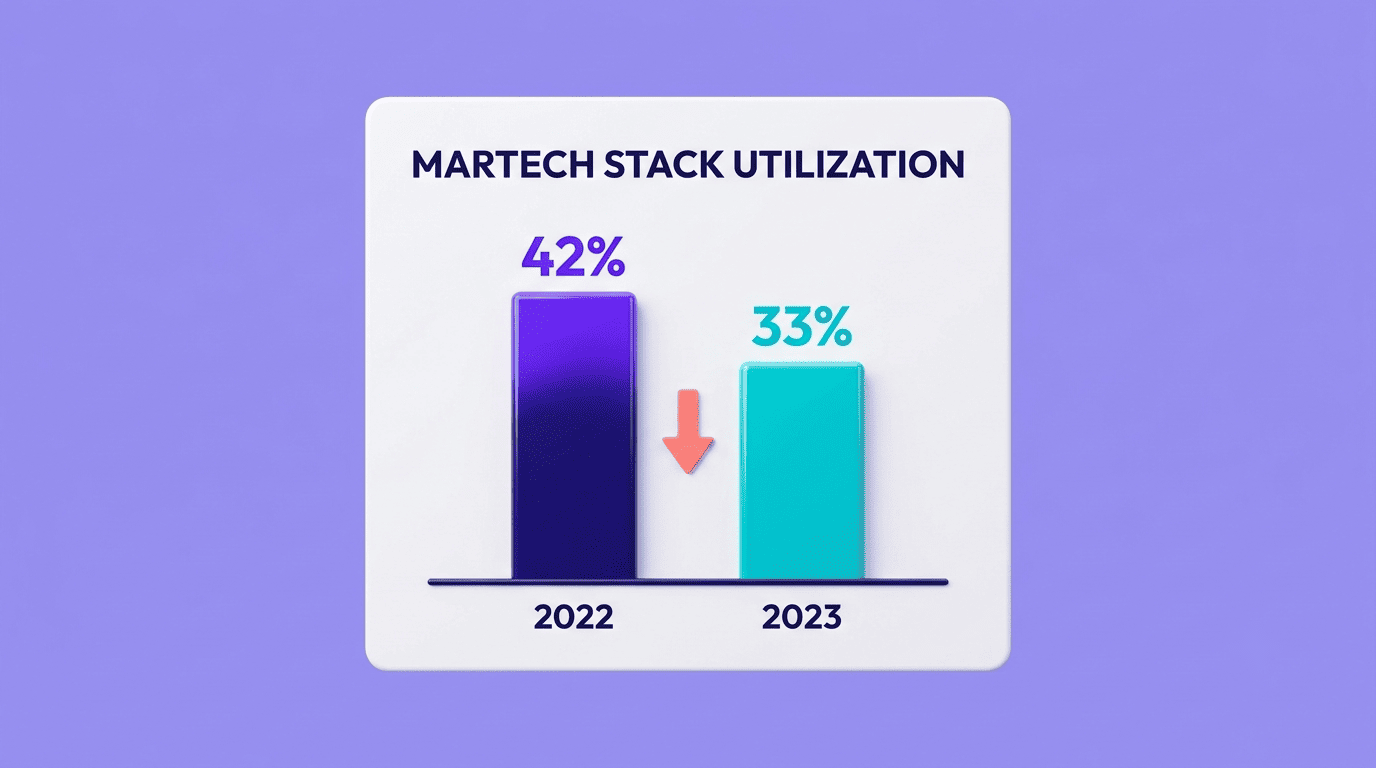
The strongest 2026 stack pairs a creative generator like AdCreative with an autonomous optimizer such as Albert.ai or Madgicx, on top of the machine learning already built into Google Ads and Meta. That grouping matters because, per Gartner’s 2023 Marketing Technology Survey, marketers were using only 33% of their martech stack’s capability, down from 42% the year before — so this guide organizes tools by the job they do, not by hype.
What AI Actually Does in Paid Advertising
AI does not «run marketing.» In paid media it handles four concrete jobs: creative generation, audience targeting, bid and budget optimization, and measurement. The native ad platforms already automate most of this. Google Ads Performance Max and Meta Advantage+ both use machine learning to choose placements, audiences and bids from a single campaign setup.
Google describes the approach plainly in its official documentation:
Performance Max is a goal-based campaign type that allows performance advertisers to access all of their Google Ads inventory from a single campaign.
Google Ads Help
The four jobs AI handles
| Job | What AI does | Example tools |
|---|---|---|
| Creative generation | Turns a brief into image, copy and video variants | AdCreative, Arcads.ai, HubSpot Campaign Assistant |
| Audience targeting | Matches variants to likely converters | Meta Advantage+, Warmly |
| Bid and budget optimization | Shifts spend toward what works, in real time | Albert.ai, Madgicx, Birch |
| Measurement | Rebuilds attribution from clicks to sales | Triple Whale, Warmly |
Creative generation turns a brief into finished image, copy and video variants. Targeting matches those variants to the audiences most likely to convert. Bid and budget optimization moves money toward what is working, in real time. Measurement stitches clicks, sessions and sales back into attribution you can act on. A tool is worth adding only when it clearly owns one of these jobs better than the native platform.
Why 2026 is different
Generative models now produce complete ad units — image, headline and short video — in minutes rather than days. That sits on top of programmatic advertising, the automated buying layer that already places most display and social inventory. The shift in 2026 is that the creative bottleneck, not the buying, is what AI removes.
Best AI Tools for Ad Creative Generation
Creative is where AI advertising tools deliver the fastest payback, because testing more variants is the most reliable way to lower cost per result. This category splits cleanly into static/display generators and video tools.
| Tool | Best for | Starting price |
|---|---|---|
| AdCreative AI | Static and display creative | $39/mo (Starter) |
| HubSpot Campaign Assistant | Free ad copy | Free (Public Beta) |
| Arcads.ai | UGC-style video ads | $110/mo (10 videos) |
| Foreplay | Ad research and swipe files | $59/mo (Basic) |
AdCreative AI and HubSpot Campaign Assistant
AdCreative AI generates on-brand ad images and copy, with plans running from $39/mo (Starter) up to $999/mo (Ultimate) and unlimited access to iStock’s photo library included. For teams that only need copy, HubSpot’s Campaign Assistant is a free Public Beta that writes ad text for Facebook, Google and LinkedIn straight from a prompt. HubSpot reports that customers using its platform acquire 129% more leads and close 36% more deals, which is the kind of downstream lift a free copy generator is meant to feed.
Video and UGC ad tools
Short-form video is the hardest creative to produce at volume, so it is where AI ad software earns its keep. Arcads.ai starts at $110/mo for 10 videos and specializes in UGC-style variants for TikTok and Reels. Foreplay, from $59–$459/mo depending on team size, is less a generator and more a research tool — it captures competitor ads into searchable swipe files so your prompts start from what already works.
Best AI Tools for Campaign Optimization and Bidding
Once creative is flowing, the next job is spending efficiently. Optimization tools watch performance and shift budget automatically, which is exactly the work humans do worst and slowest.
Albert.ai runs campaigns autonomously across channels. It optimizes creative and spend across Facebook, YouTube, Google Ads and Bing. In one widely cited case study, Harley-Davidson New York used Albert.ai and reported a 2,930% increase in leads per month — an outlier result, but a signal of what full automation can reach.
Madgicx and Birch automate paid budgets. Madgicx All-in-One runs from $39/mo, scaling with ad spend, and automates Meta and Google budgets with a 7-day free trial. Birch (formerly Revealbot) starts at $49/mo and scales to $99/mo on its Pro plan, with custom Enterprise pricing above that, automating rules and budget shifts across Meta, TikTok and LinkedIn.
Workflow tools connect the stack. Metaflow AI, from $19/mo with 2,500+ integrations, builds repeatable cross-channel paid-social workflows, while Zapier’s 7,000+ integrations wire campaign triggers to the rest of your systems.
AI for Paid Social vs Paid Search
The two halves of paid media reward different tools, so it helps to pick per channel rather than buying one platform for everything.
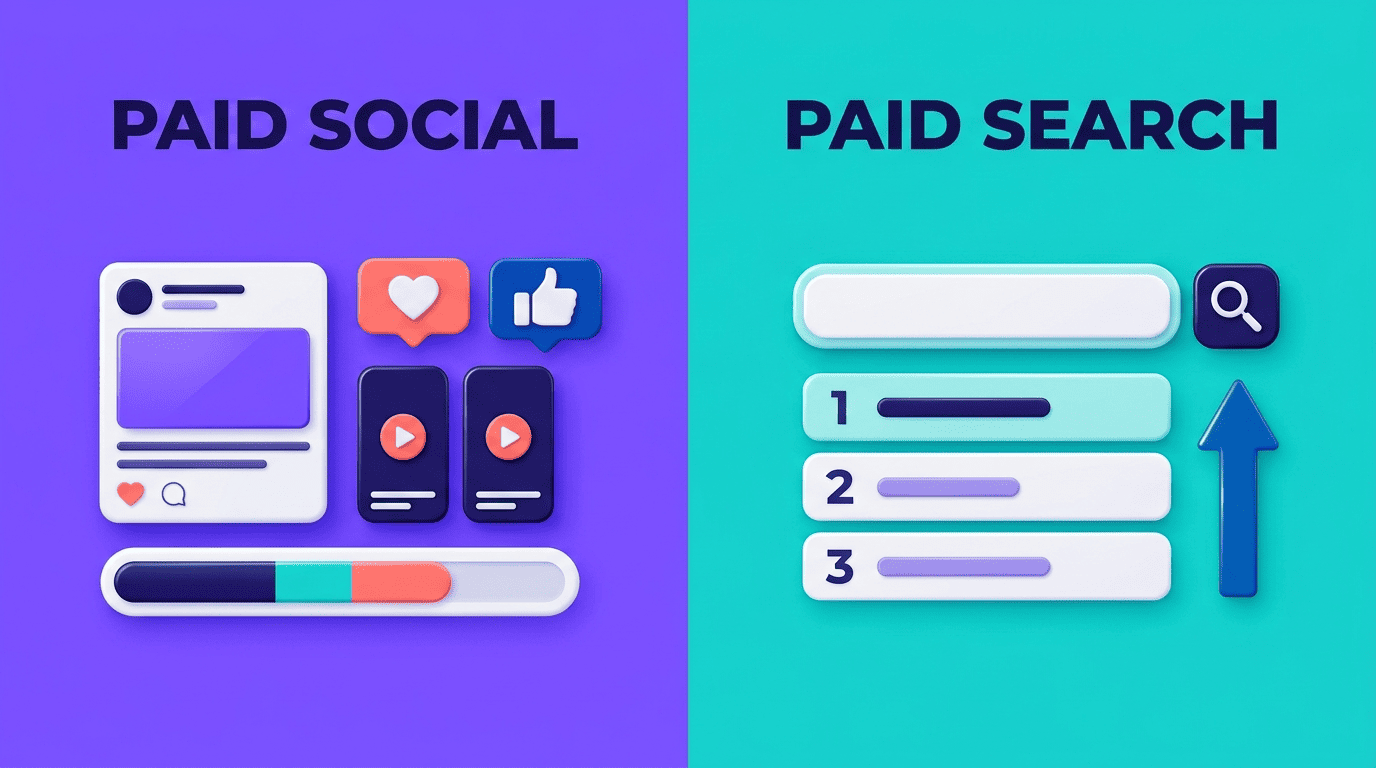
Paid social
On social, creative volume and audience discovery win. Meta Advantage+ automates audience selection and creative combinations natively, and tools like Birch/Revealbot layer automated budget rules on top across Meta, TikTok, LinkedIn, Pinterest and Snapchat. Supported channels across the category span Meta, LinkedIn, Google Ads, TikTok, Pinterest, Snapchat, YouTube and Bing.
Paid search
On search, the game is bid management and query hygiene. Google Ads Performance Max handles cross-inventory automation, while dedicated optimizers add control: Opteo, from $129/mo, surfaces bid and keyword recommendations, and Optmyzr, averaging $500+/mo, automates rules for larger accounts.
AI for Attribution, Reporting and Fraud
Spending smart only works if you can trust the numbers, so the last category covers measurement and protection.
Measurement and visitor identification
Warmly identifies up to 500 anonymous website visitors per month on its free plan, with its AI Data Agent starting at $10,000/year for larger teams. For ecommerce attribution, Triple Whale (free tier, then from $179/mo up to $749/mo on Professional) reconstructs the customer journey across ad platforms so budget decisions rest on real sales, not last-click guesses.
Click-fraud protection
Invalid clicks quietly drain paid-search budgets. TrafficGuard filters them starting at $49/mo (Shield plan, up to $30K in monthly spend), with larger accounts priced closer to 2% of ad spend, while retention tools like Wisepops use timed web-push and cart-recovery messaging to win back abandoned sessions. When any of this creative or targeting is AI-generated, follow the FTC’s endorsement and disclosure guidance so automated ads stay compliant.
How to Choose an AI Advertising Tool
The market rewards matching each tool to a single job rather than chasing an all-in-one promise. Six criteria separate the useful from the shelfware:
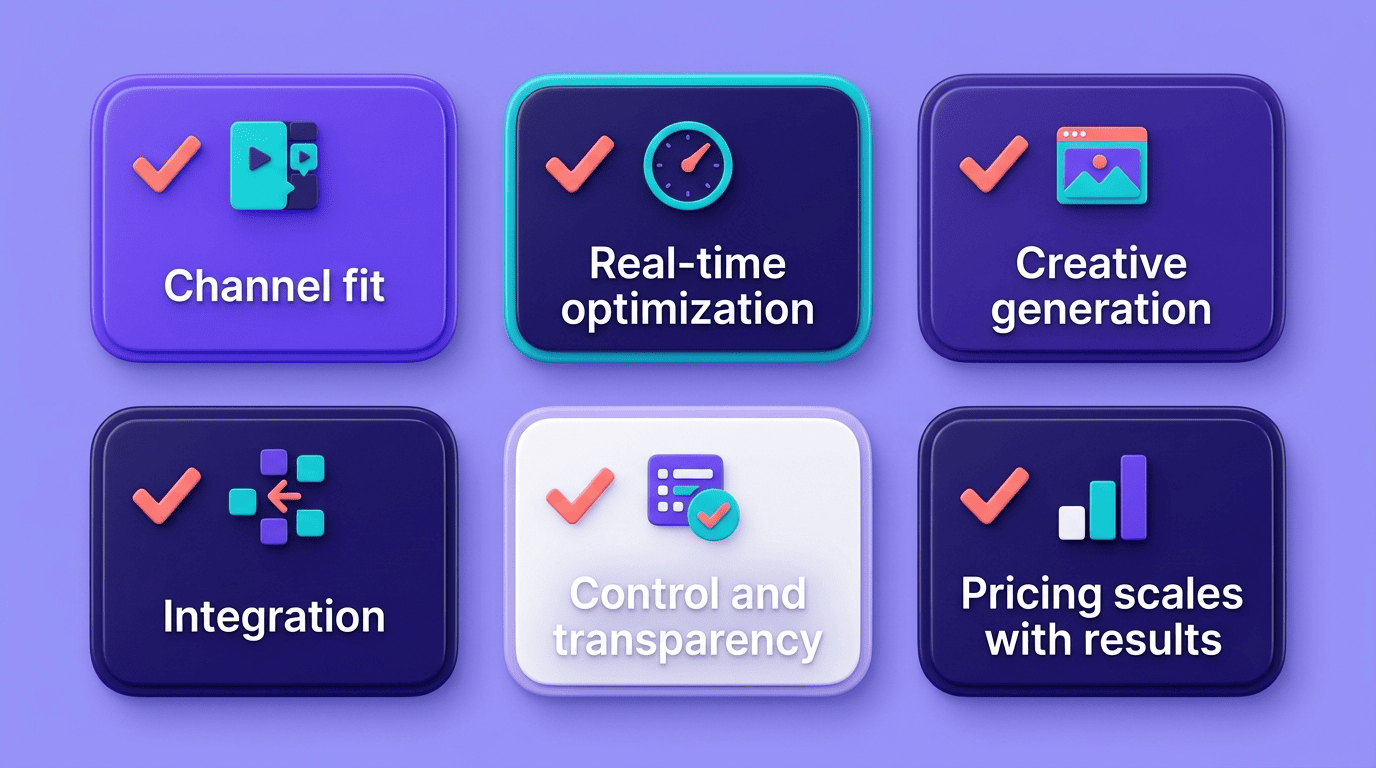
- Channel alignment — does it support the platforms where you actually spend?
- Real-time optimization — can it act on performance without waiting for a human?
- Creative and copy generation — does it produce variants you would run?
- Integration — does it connect to your ad accounts and CRM?
- Control and transparency — can you see and override what it does?
- Pricing and scalability — does cost track with results, not just seats?
A practical rollout keeps a human in the loop while you build trust:
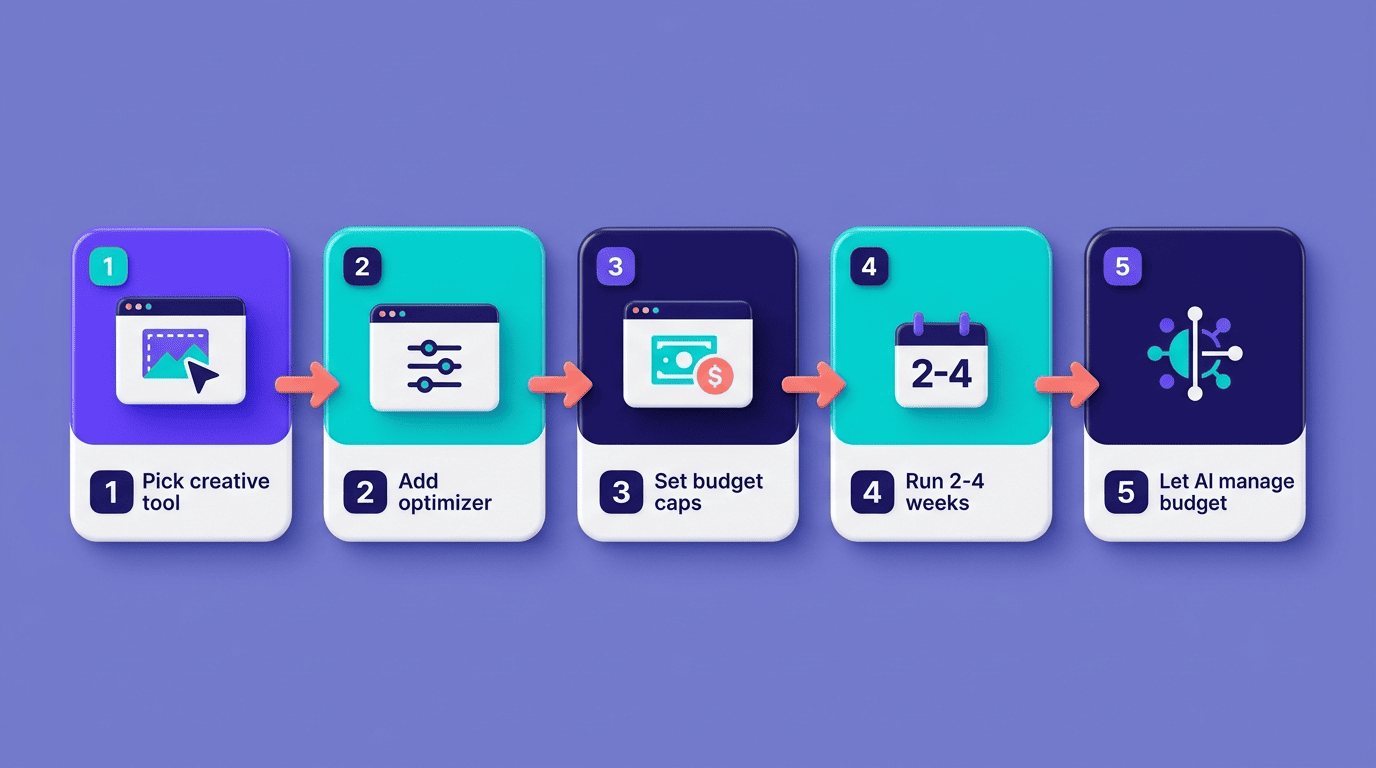
- Pick one creative tool (for example, AdCreative or HubSpot Campaign Assistant).
- Add one optimizer (Albert.ai, Madgicx or Birch) on a single channel.
- Set hard budget caps and brand guardrails before enabling automation.
- Run for two to four weeks and compare cost per result against your baseline.
- Only then let the tool manage budget shifts, and layer in attribution.
If you are still mapping categories, the hub of best AI marketing tools covers the adjacent jobs — content, SEO, email and analytics — that feed the same campaigns.
Related AI marketing tool guides
Building a full stack? Explore AI analytics and reporting tools and AI social media marketing tools to round out your workflow across the marketing funnel.